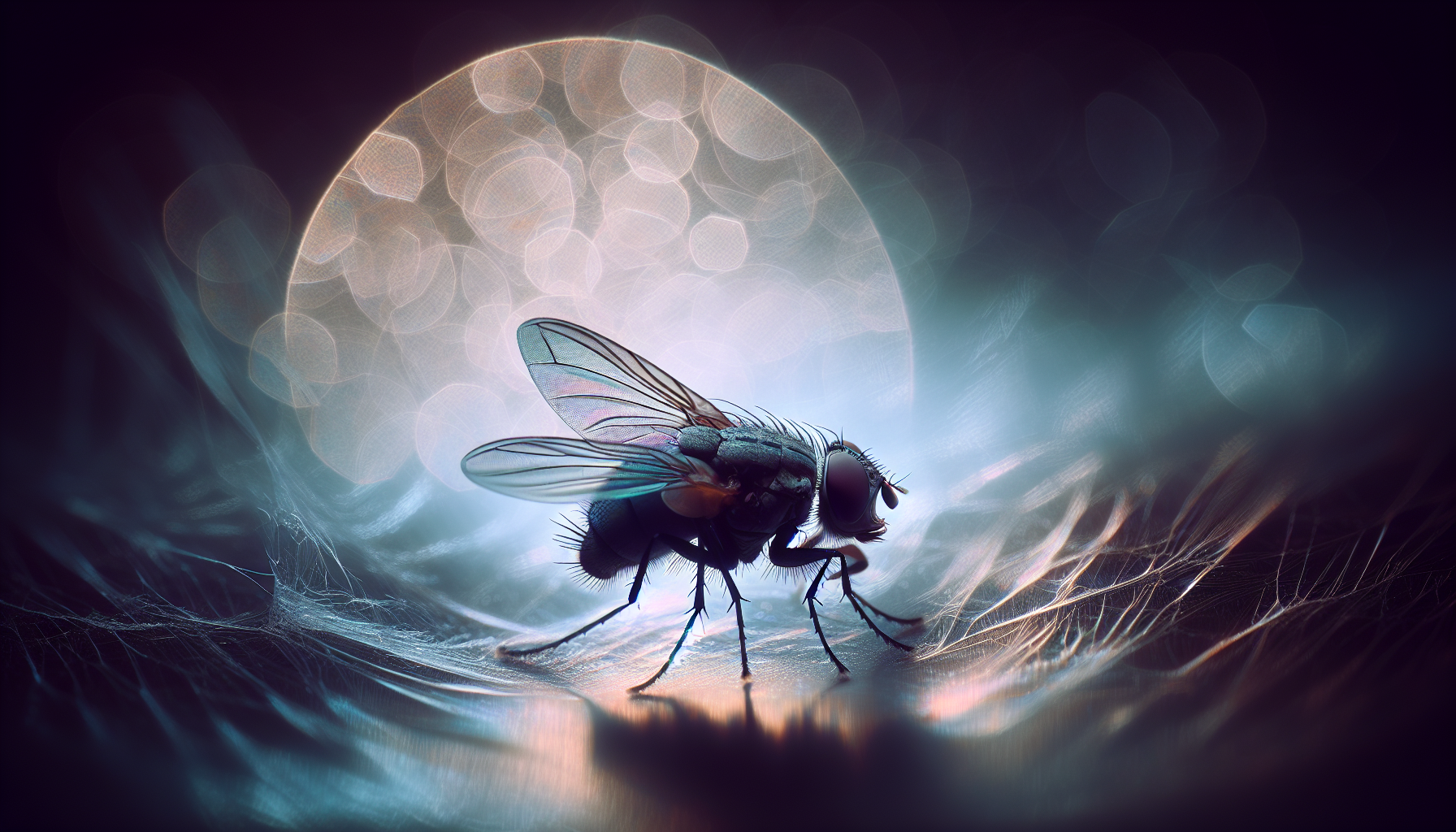
Dreams About Flies – Meaning And Interpretation
Have you noticed flies appearing repeatedly in your dreams and wondered what they might be signaling about your waking life?
Dreams About Flies – Meaning And Interpretation
You will find in this article a thorough examination of the symbolism, psychological perspectives, cultural viewpoints, and practical steps related to dreams about flies. You will be guided through common dream scenarios, their typical meanings, and actionable responses you can take to understand and work with these dreams.
Introduction: Why Fly Dreams Matter
You should treat dreams about flies as more than random images; they often carry emotional, symbolic, or situational information relevant to your life. Paying attention to details—such as how many flies appear, what they are doing, and how you feel—will give you clearer clues about their meaning.
You will learn how different contexts change interpretation: a single fly on food differs from a swarm in your bedroom. You will also learn approaches for analyzing recurring fly dreams and using them as tools for growth.
Common Symbolism of Flies in Dreams
You will encounter a range of symbolic meanings for flies because they are associated with concepts like irritation, decay, persistence, and small but persistent problems. The symbolic value can be negative, neutral, or occasionally positive depending on the context of the dream and your personal associations.
You should keep in mind that symbolic meanings are not universal mandates; your emotional response during the dream is one of the best keys to interpretation. Use both symbolic frameworks and your personal context to reach a balanced understanding.
General Symbolism
You can interpret flies as signifiers of annoyance, contamination, or moral or emotional decay. They frequently point to issues you might find small but recurrent: nagging thoughts, unresolved guilt, or ongoing conflicts.
You should also consider flies as reminders to deal with neglected details or small problems before they accumulate. The presence of flies can signal what you might be ignoring in everyday life.
Negative vs Positive Meanings
You will often encounter negative associations such as disorder, impurity, or intrusive thoughts. In many dreams, flies represent bothersome situations that sap energy or distract you from priorities.
You should also recognize that flies may have neutral or even positive implications in certain contexts—such as resilience or adaptability—especially if the dream leaves you feeling curious rather than anxious. Interpretation depends on nuance and context.
Psychological Interpretations
You should examine fly dreams using psychological frameworks to clarify whether the images are expressions of unconscious material, cognitive processing, or emotional signaling. Psychological models help translate dream imagery into practical insights for your waking life.
You will find that different schools of psychology emphasize different aspects of meaning, from repressed impulses to shadow material or problem-solving functions.
Freudian Perspective: Repressed Impulses and Anxiety
You should know that from a Freudian perspective, flies might be linked to repressed desires, guilt, or sexual anxieties, especially when the dream carries strong feelings of shame or disgust. Freud often interpreted insect imagery as symbolic of internal conflicts that have not been integrated into conscious life.
You will benefit from reflecting on whether the flies are connected to recent anxieties about morality, relationships, or instinctual urges. If so, the dream might be encouraging you to acknowledge and resolve those tensions.
Jungian Perspective: Shadow, Decay, and Integration
You should consider Jungian ideas where flies can represent aspects of the shadow—parts of yourself that you have rejected or ignored. These images can act as signals that integration of shadow material is needed for greater wholeness.
You will find that working with fly imagery through active imagination or self-reflective exercises can help you bring repressed or overlooked content into conscious awareness, supporting personal growth.
Cognitive and Neuroscientific Views: Problem-Solving and Memory
You should remember that cognitive approaches view dreams as processes that consolidate memory, solve problems, or simulate threats. Under this model, fly dreams may reflect your brain rehearsing solutions to persistent annoyances or processing sensory impressions from the day.
You will find practical value in noticing whether your fly dreams follow stressful days, exposure to related stimuli, or unresolved tasks; they may function as your mind’s way of prioritizing issues that need attention.
Cultural and Spiritual Perspectives
You should explore how different cultural frameworks assign meaning to flies, since broader cultural symbolism often shapes your personal associations. Interpretations vary widely across religions, folk traditions, and spiritual systems.
You will gain nuance by comparing cultural meanings to your own beliefs, enhancing your ability to integrate symbolic insight with your worldview.
Western Religious Views
You should understand that in Western Abrahamic contexts, flies sometimes symbolize moral decadence, pestilence, or divine judgment, as seen in certain scriptural and folkloric references. These associations can influence how you emotionally react to flies in dreams.
You will find, however, that symbolic religious meanings are not prescriptive; they provide a historical lens that you can either adopt or set aside depending on your personal beliefs.
Eastern Philosophical Views
You should notice that in some Eastern traditions—such as certain strands of Hindu and Buddhist thought—flies are occasionally viewed as attachments, mental afflictions, or minor obstacles on the path to clarity. They can represent distractions that impede mindfulness or spiritual practice.
You will derive practical guidance by treating flies as reminders to cultivate presence and address small, recurring attachments that detract from your focus.
Indigenous and Folk Interpretations
You should respect that Indigenous and local folk interpretations vary widely, often embedding flies within ecological, moral, or communal narratives. In some traditions, flies may signal imbalance in the environment or social relations.
You will gain a richer interpretive palette by considering these traditions, especially if any of them resonate with your cultural background or personal values.
Common Fly Dream Scenarios and Their Meanings
You should consult a scenario table to quickly map common fly dream types to likely interpretations. This will give you a structured reference to begin your personal analysis.
You will then read detailed subsections about each scenario to help you refine meanings based on emotion, context, and personal associations.
| Dream Scenario | Typical Interpretations | Key Questions to Ask |
|---|---|---|
| Single fly landing on you | Minor irritation, small unresolved issue, an intrusive thought | Where did it land? How did you react emotionally? |
| Swarm of flies | Overwhelming problems, anxiety, collective issues | Was the swarm threatening or merely present? |
| Flies on food | Contamination, fear of spoilage, compromised boundaries | Is the food important to you? Are you protecting something? |
| Flies in your home | Invasion of personal space, unresolved domestic stress | Which room? Whose house? How safe did you feel? |
| Killing or swatting flies | Desire to eliminate annoyance, assertiveness | Did you succeed? How did it feel afterward? |
| Eating flies / you eat flies | Forbidden or unclean consumption, taking on unwanted issues | Were you compelled to eat? Was it avoidable? |
| Dead flies | End of irritation, resolved problem, suppressed feelings | Were there many or just a few? How did you interpret the dead flies? |
| Flies biting / stinging | Painful reminders, small but repeated emotional hurts | Who or what is causing repeated pain in your life? |
| Fruit flies / tiny flies | Minor irritants or small issues that multiply quickly | Are small details adding up to a larger problem? |
| Large flies / horseflies | More overt threats, aggressive intrusions, major annoyance | Does the size reflect the perceived magnitude of the issue? |
Single Fly Landing on You
You should interpret a single fly on your body as a sign of a minor but persistent annoyance or intrusive thought. It often highlights a specific detail in your life that you can address without major upheaval.
You will want to recall whether the fly landed on an intimate or trivial area; this informs whether the issue relates to relationships, self-image, or everyday details.
Swarm of Flies
You should take a swarm dream seriously as it commonly reflects feelings of being overwhelmed, clinically anxious, or confronted by multiple simultaneous problems. The swarm’s tone—threatening or merely noisy—changes the diagnostic nuance.
You will benefit from mapping current life stressors to the swarm imagery to identify whether the dream is mirroring work overload, family conflict, or social pressure.
Flies on Food
You should recognize that flies feeding on food symbolize contamination, loss of appetite for something you once valued, or boundary violations where private resources are compromised. Food in dreams is often tied to nourishment, pleasure, and relationships.
You will find it helpful to question whether the item being contaminated represents a relationship, a project, or an aspect of identity that you wish to protect.
Flies in Your Home
You should read flies in your home as a representation of domestic or personal-space intrusions—things you might be denying or failing to manage. Your home in dreams usually symbolizes your psychological world or emotional life.
You will get more actionable insight by noting which room is infested: bedroom (intimacy), kitchen (nourishment), or living room (relationships).
Killing or Swatting Flies
You should see the act of killing flies as an assertion of control and a desire to eliminate problems, but the outcome and your feelings about it matter. If you kill flies successfully and feel relief, the dream suggests effective problem resolution.
You will be cautious if killing produces guilt or shame; this may indicate that your approach to resolving problems sacrifices something important or affects your sense of ethics.
Eating Flies
You should treat eating flies as a powerful image of taking in what is unpleasant or morally questionable. It can indicate that you are absorbing negativity from your environment or accepting terms that compromise your standards.
You will benefit from exploring whether you are tolerating harmful relationships, toxic work conditions, or self-sabotaging patterns.
Dead Flies
You should interpret dead flies as the end of an irritation or the suppression of unwanted feelings. While death of the flies can signal relief, it can also indicate avoidance: you may be repressing emotions rather than processing them.
You will want to check whether relief in the dream felt healthy; a sense of emptiness or numbness following the flies’ death can call for deeper emotional work.
Flies Biting or Stinging
You should understand biting flies as symbolic of repeated small hurts—verbal jabs, microaggressions, or chronic stressors that cumulatively harm you. These dreams highlight pain that may not be dramatic but is persistent.
You will achieve clarity by identifying patterns in your waking life where small negative events are recurring and eroding well-being.
Fruit Flies or Tiny Flies
You should view tiny flies as representations of seemingly insignificant issues that can multiply quickly if left unchecked. They are often about details, habits, or anxieties that proliferate.
You will strengthen your response by handling small tasks and anxieties before they grow into a swarm.
Large Flies or Aggressive Flies
You should treat unusually large or aggressive flies as markers of more overt threats—people, situations, or inner drives that you perceive as forceful or domineering. Their size amplifies perceived urgency.
You will respond best by assessing power dynamics in your life and deciding if you need stronger boundaries or external help.
Emotional Context and Personal Associations
You should always weigh your personal emotional response in the dream more heavily than any generic symbolism. The same image can mean relief for one person and terror for another depending on personal history and associations.
You will improve interpretation by considering recent events, unresolved conflicts, health status, or cultural background that may shape the emotional tone of your dream.

Practical Steps When Fly Dreams Recurring or Disturbing
You should follow practical steps to address recurring or upsetting fly dreams and use them as catalysts for positive change. Tools include journaling, behavioral adjustments, and therapeutic exploration.
You will find that combining symbolic reflection with practical action often reduces dream intensity and helps resolve the underlying issues.
- Keep a dream journal: Record details of fly dreams, the emotional tone, and waking events preceding the dream. This creates pattern awareness.
- Identify triggers: Note whether stress, diet, media exposure, or environmental factors correlate with the dreams.
- Address practical life problems: If flies symbolize small unresolved issues, take concrete steps—clear clutter, resolve a small conflict, or delegate tasks.
- Use stress management: Practice relaxation, mindfulness, or breathing techniques to reduce anxiety that might fuel recurrent imagery.
- Seek therapy for persistent nightmares: If fly dreams are part of a broader pattern of distress, a trained therapist can help you process underlying emotions.
You will notice improvements over time as you combine introspection with practical measures.
Dream Journaling Prompts and Questions to Ask Yourself
You should use targeted prompts to deepen self-understanding about your fly dreams. Answering these questions after a dream can reveal actionable insights and patterns.
You will find these questions helpful in clarifying whether the dream points to emotional, relational, or practical concerns.
- Where exactly did the flies appear, and what else was present?
- What emotion dominated the dream—disgust, fear, curiosity, indifference?
- Did you act in the dream? How did you respond to the flies?
- Are there unresolved issues in your life that fit the imagery of contamination, small annoyances, or boundary violations?
- What would change if you removed or resolved the thing the flies might represent?
You will get the most benefit by revisiting these prompts across multiple dreams to detect patterns.
Working With a Therapist or Dream Worker
You should consider professional support if fly dreams contribute to anxiety, sleep disruption, or if they recur with increasing intensity. A therapist can help translate symbolic content into actionable therapeutic work.
You will find modalities such as psychodynamic therapy, cognitive-behavioral therapy for nightmares (CBT-N), and Jungian analysis particularly useful depending on your goals.
When to Seek Immediate Professional Help
You should seek immediate help if the dreams provoke panic attacks, persistent insomnia, suicidal ideation, or a clear decline in functioning. These are clinical concerns that require prompt attention.
You will prioritize safety by contacting mental health professionals, crisis lines, or emergency services when necessary. Early intervention can prevent escalation.
How Therapy Can Help
You should expect therapy to assist you in connecting dream imagery to life events and emotional patterns. Therapists provide frameworks, tools, and containment for processing painful content.
You will also learn coping strategies to regulate the emotional aftermath of disturbing dreams and to integrate insights into everyday decision-making.
Using Fly Dream Imagery for Personal Growth
You should view fly dreams as invitations to address small but impactful issues, clean up boundaries, and refine your coping strategies. Whether symbolic of decay or persistence, fly imagery can guide productive change.
You will benefit from translating symbolic insights into measurable goals—decluttering your physical space, addressing a nagging relationship problem, or developing assertiveness skills.
Techniques to Work With the Imagery
You should experiment with active imagination (Jungian technique), dream re-scripting, or lucid dreaming to transform the dream narrative. This empowers you to rehearse alternative responses and reduce nightmare intensity.
You will also practice journaling, art therapy, or somatic exercises to externalize and process feelings associated with the fly imagery.
Case Examples: Interpreting Fly Dreams in Different Contexts
You should consider realistic examples to see how interpretation shifts with context. Below are short case vignettes showing different meanings and responses.
- Example 1: You dream of a fly landing on your wedding cake. You may be unconsciously worried about a current or future relationship being spoiled by an outside influence or unresolved insecurity. Addressing the specific worry—communicating with your partner or clarifying values—can alleviate the symbolic contamination.
- Example 2: You dream of swarms in your workplace. This likely represents burnout, micro-problems, or unresolved team conflict. Practical steps include workload review, boundary-setting, and discussing issues with management or colleagues.
- Example 3: You dream of eating flies reluctantly. This may reveal that you are accepting conditions or terms that compromise your standards. Consider practical changes—refusing certain obligations or asserting values in relationships.
You will find these examples useful as templates to adapt to your personal circumstances.
Quick Reference: Actions to Take Based on Common Fly Dream Themes
You should use the table below to convert symbolic insight into practical first steps tailored to common dream themes. This quick reference helps you move from interpretation to action.
| Dream Theme | Likely Underlying Issue | Immediate Action |
|---|---|---|
| Annoyance (single fly) | Small unresolved task | Schedule time to address or delegate the task |
| Overwhelm (swarm) | Multiple stressors, burnout | Prioritize obligations and reduce load; practice boundaries |
| Boundary violation (flies on food) | Feeling taken advantage of | Communicate limit, protect resources |
| Invasion (flies in home) | Personal space or relationship stress | Reassess living situation or relationship boundaries |
| Avoidance (dead flies) | Suppressed feelings | Reflect in journal; consider therapy to process emotions |
| Repeated small hurts (biting flies) | Chronic micro-stressors | Track incidents; address patterns with assertive communication |
You will use these steps as starting measures and adapt them as you gain clarity.
Summary and Key Takeaways
You should understand that dreams about flies are multifaceted symbols that often point to small but persistent issues, contamination of something valuable, or aspects of the shadow that require attention. Emotional tone and personal context are critical to nuanced interpretation.
You will benefit most by combining symbolic reflection with practical action—journaling, stress management, boundary-setting, and, when needed, professional support. Over time, you will find that working with your dreams can reduce their intensity and convert symbolic warnings into tangible growth.
You should approach your fly dreams with curiosity, structured reflection, and a plan for addressing the waking-life scenarios they highlight. Doing so will help transform unsettling imagery into actionable insight.