Dreams About Frog – Meaning And Interpretation
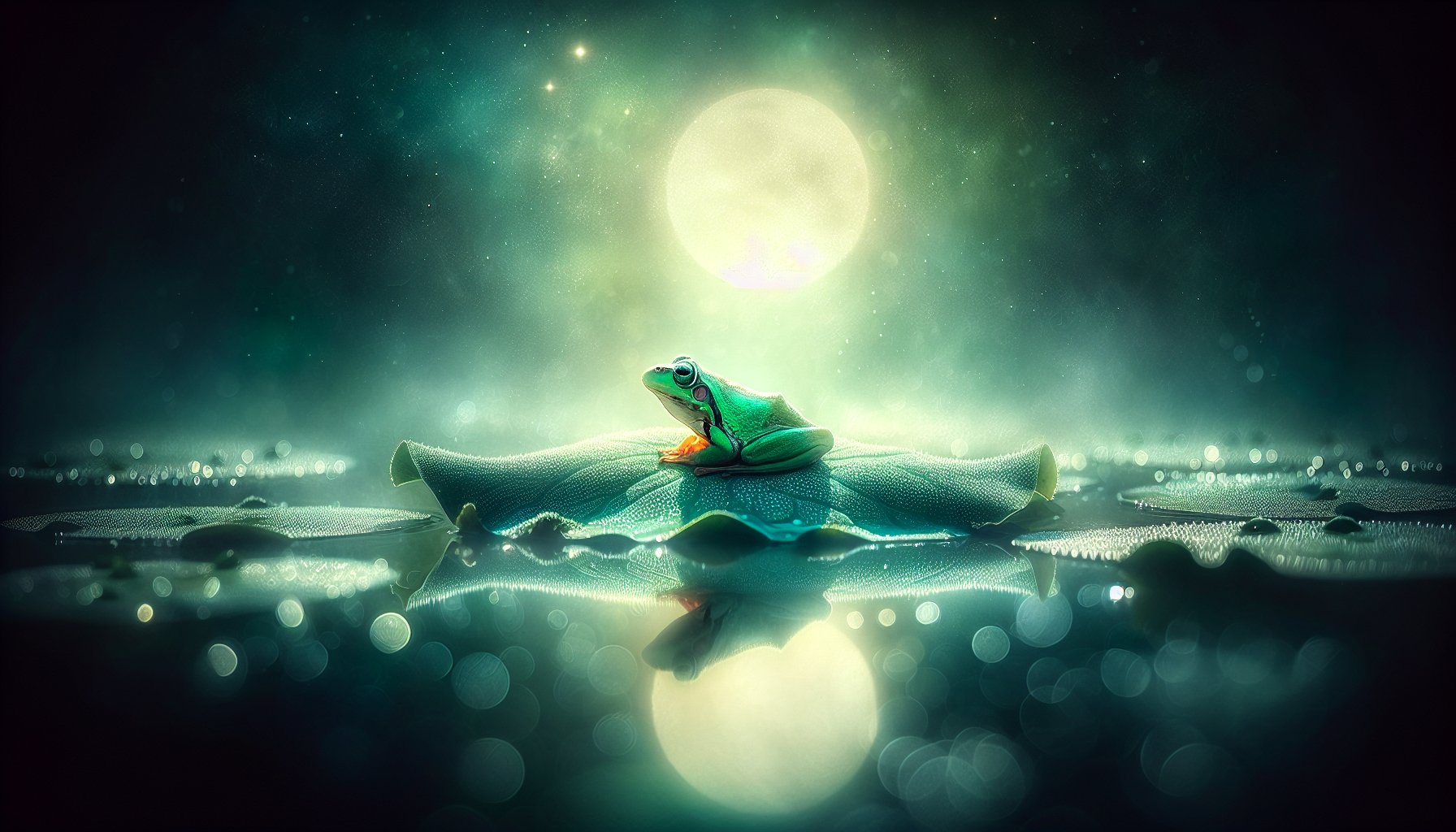
Have you woken from a dream about a frog and felt uncertain what message it might carry for your life?
Dreams About Frog – Meaning And Interpretation
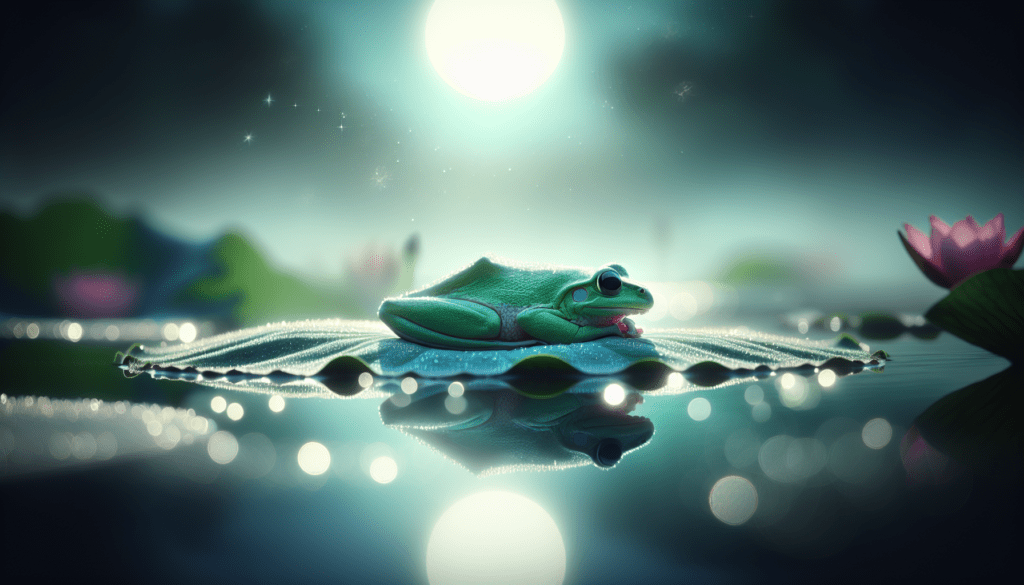
Dreams about frogs can feel vivid, puzzling, or even unsettling. In this article you will find a comprehensive, professional guide to understanding frog dreams from symbolic, psychological, cultural, and practical perspectives. You will get clear guidance on how to interpret common frog-dream scenarios and how to apply insights to your waking life.
Why animals in dreams matter
Animals in dreams often represent instinctual drives, emotional states, or unconscious content that you may not be fully aware of during waking hours. Frogs, as amphibians, carry unique symbolic weight because they straddle land and water—two realms often associated with conscious life and the unconscious mind respectively.
Key symbolic themes of frog dreams
You will encounter several recurring symbolic themes when interpreting frog dreams. These themes will help you connect the imagery to feelings, life events, and internal processes.
- Transformation and change: Frogs undergo metamorphosis (egg → tadpole → frog), making them natural symbols for personal growth, change, and development.
- Emotional cleansing and renewal: Water association often links frogs to emotional purification, release, and renewal.
- Fertility and creativity: In many cultures frogs symbolize fertility, abundance, and creative potential.
- Hidden or emerging instincts: Because frogs cross water and land, they can reflect the emergence of instinctual material into conscious awareness.
- Luck and prosperity vs. impurity and fear: Depending on cultural context, frog dreams can be auspicious or signify discomfort and negativity.
How to begin interpreting your frog dream
When you try to interpret your dream about a frog, start by asking targeted questions. These questions will help you translate symbolic imagery into personally meaningful insight.
- Where does the dream take place? The setting affects the emotional tone.
- What is the frog doing? Actions (jumping, singing, turning into something) are crucial.
- How do you feel during and after the dream? Emotions provide direct clues.
- Are there other symbols present (water, houses, people)? Additional symbols refine meaning.
- Is there a sequence (tadpole → frog, transformation)? That often points to growth or development.
Common frog dream scenarios and their interpretations
Below is a practical table summarizing common frog dream scenarios and concise interpretations. Use it as a quick reference when you recall elements of your dream.
| Dream scenario | Typical interpretation | What to notice next |
|---|---|---|
| Seeing a frog in water (calm) | Emotional purification, coming to terms with feelings | How calm or turbulent is the water? |
| Frog jumping toward you | Opportunity or required action—an urge to respond | Are you afraid or ready to accept? |
| Frog escaping or jumping away | Missed opportunity, avoidance of change | Is avoidance a pattern in your life? |
| Frog transforming into a human or vice versa | Major personal transformation or identity shift | Is there a relationship or role changing? |
| Many frogs or swarms | Overwhelming emotions, collective issues, fertility | Are many concerns surfacing at once? |
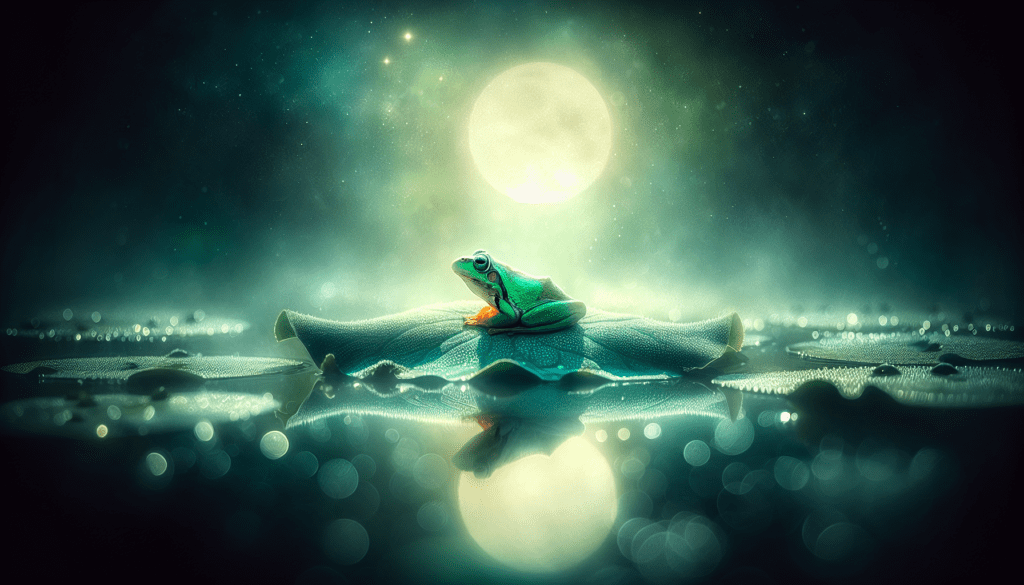
| Green frog | Growth, vitality, healing | Is your focus on recovery or development? |
| Dead or dying frog | Endings, loss of potential, neglected emotional needs | What needs to be acknowledged or grieved? |
| Frog in your house | Personal or domestic transformation | Which area of home life feels different? |
| Frog croaking loudly | Message or warning—attention to a matter | What is the subject demanding attention? |
| Touching or holding a frog | Integration of instinctual content | What part of yourself are you inviting into awareness? |
| Being chased by a frog | Avoidance of instinct or emotion | What are you evading in waking life? |
| Eating a frog | Consuming changes—perhaps difficult tasks that lead to growth | Does the task require endurance or acceptance? |
Psychological perspectives
You will gain different insights depending on the psychological framework you use to interpret frog dreams. Each perspective offers a unique set of tools.
Freudian interpretation
From a Freudian lens, amphibious creatures may symbolize sexual energy, bodily functions, or suppressed desires. The frog might represent unconscious impulses that seek expression. You should ask whether the dream links to repressed urges or early developmental conflicts.
Jungian interpretation
Carl Jung emphasized archetypes and individuation. Frogs can function as symbols of transformation, the Self, or the process of becoming whole. A frog’s metamorphosis is analogous to psychological development—tadpole stages may reflect earlier life phases, while a mature frog signals integration. You should consider whether the dream points toward a stage in your individuation journey.
Cognitive and continuity theories
These theories view dreams as processing of waking-life experiences. A frog dream could simply be the brain consolidating recent events—perhaps you saw a frog or read about amphibians. You should evaluate whether everyday stimuli or emotional concerns are mirrored in the dream.
Neurobiological perspective
From a neurobiological standpoint, dreams arise from brain activity during REM sleep. The frog may be an arbitrary image constructed by neural networks. Nonetheless, your mind often assigns meaning to these images. You should balance symbolic interpretation with awareness of physiological causes like stress, medication, or sleep patterns.
Cultural and mythological meanings
Different cultures assign diverse meanings to frogs. Understanding cultural symbolism helps you situate your personal interpretation within broader traditions.
Chinese symbolism
In Chinese culture frogs are commonly associated with prosperity and good fortune. The three-legged money frog (Chan Chu) is a talisman of wealth. If your frog dream feels auspicious, you might interpret it as a sign of forthcoming financial or material improvement.
Egyptian and Mesopotamian views
In ancient Egypt, frogs symbolized fertility and the annual Nile inundation—which represented life-giving water. You should connect frog dreams in this context to themes of fertility, abundance, and cyclical renewal.
Native American traditions
Some Native American tribes view frogs as mediators between water and land and as healers. Frog dreams may be interpreted as messages about emotional balance and healing. You should respect specific tribal interpretations and contexts, which vary widely.
European folklore
In European fairy tales frogs often become princes or transformative figures — a narrative linking frogs with unexpected change and potential romantic or social transformation. If a human transformation appears in your dream, it might resonate with those folkloric themes.
African and South American perspectives
Many African and South American traditions emphasize frogs’ connection to rain, fertility, and the earth’s vitality. Your dream may point to renewal, agricultural concerns, or communal wellbeing in these contexts.
Emotions commonly associated with frog dreams
How you feel during the dream is often more telling than the exact image. Below are common emotions and their practical implications.
- Anxiety or fear: Possible avoidance of necessary change or suppressed emotion.
- Curiosity or fascination: Openness to new phases or self-discovery.
- Disgust or repulsion: Conflicted feelings about a personal aspect you find unattractive.
- Relief or joy: Successful emotional release or resolution.
- Confusion: Transitional phases where identity or purpose feels unclear.
Interpreting frog colors, numbers, and locations
Small details refine meaning. Consider these specific elements when interpreting your dream.
Color meaning
- Green: Growth, healing, health.
- Brown: Earthiness, grounding, stability.
- Yellow: Caution, transformation with complexity.
- Black: Shadow aspects, deep unconscious material.
- White: Purity, spiritual renewal.
Number significance
- One frog: Singular transformation or a single issue.
- Two frogs: Relationship dynamics, integration of dual aspects.
- Many frogs: Cumulative emotional content or collective matters.
Location significance
- Water: Emotional processes and the unconscious.
- House: Personal life, domestic concerns, identity.
- Garden or nature: Natural growth and personal fertility.
- City or urban space: Integration of primal instincts into modern life.
What specific frog actions mean
The frog’s behavior in the dream is particularly informative. The following list gives actions and typical interpretations.
- Jumping: Change, movement toward a new situation, or sudden impulses.
- Singing/croaking: A message, intuitive warning, or assertion of presence.
- Transforming into another creature or human: Significant identity change or role transition.
- Hiding: Repressed aspects and subconscious avoidance.
- Dying: Endings, neglected potential, or necessary closure.
- Eating: Internalizing a change or facing a task that will produce growth.
When frog dreams relate to relationships
Frog imagery often appears in relationship contexts. You should consider how the frog symbolizes the dynamics at play.
- Frog turning into a human: A partner’s hidden potential revealed, or your recognition of someone’s deeper qualities.
- Multiple frogs: Group dynamics, family issues, or social pressure affecting relationships.
- Frog escaping: Difficulty committing or fear of change within a relationship.
- Frog in your home: Relationship changes impacting your domestic life or identity.
Spiritual and shamanic interpretations
In spiritual contexts, frog dreams can indicate initiation, purification, and connection to the sacred. Shamans often treat frogs as allies that assist with emotional cleansing and contact with water spirits. You should approach these interpretations respectfully and consider whether your spiritual practice supports such meanings.
Dreams about frogs and fertility or pregnancy
Because frogs symbolize fertility in many traditions, frog dreams can sometimes relate to pregnancy or creative projects. If you are trying to conceive or starting a creative enterprise, the frog may represent potential growth or the need to nurture an idea.
Negative interpretations and warnings
Not every frog dream is positive. Some scenarios warn about complacency, moral impurity, or deception. Pay attention to context, your emotional reaction, and whether the frog’s presence brings unease. A dead or diseased frog, for example, may indicate lost potential or health concerns.
Psychological exercises to interpret your frog dream
You can apply several practical exercises to clarify meaning.
- Dream journaling: Write down the dream immediately after waking, capturing sensory details and emotions.
- Free association: Note the first words, memories, or feelings that come to mind when you think of the frog.
- Symbol mapping: Create a visual map linking dream elements to waking-life issues.
- Ask clarifying questions: Who else was present? What was the mood? How did the scene end?
- Compare patterns: Review past dreams to detect recurring frog imagery or themes.
Lucid dreaming and working with frog imagery
If you practice lucid dreaming, you can intentionally engage with frog symbols to gain insight or practice transformation. When you become lucid, approach the frog calmly and ask it what message it carries. Maintain a respectful and curious attitude, and record the experience afterward.
Practical steps to apply dream insights to daily life
Interpreting a frog dream becomes useful when you translate symbolic insights into action.
- Address avoidance: If the dream signals avoidance, identify one concrete step to face the issue.
- Foster growth: If transformation is indicated, set goals that support gradual development.
- Emotional hygiene: Use the dream as a reminder to address unresolved feelings—therapy, journaling, or conversations may help.
- Resource planning: If the dream suggests abundance or financial change, reassess budget, investments, and opportunities.
- Relationship work: If relational themes appear, open a dialogue with relevant people or seek couples therapy.
When to seek professional help
Some dreams repeat and cause distress or hint at deep unresolved trauma. If frog dreams are associated with intrusive anxiety, nightmares, or worsening mood, consider consulting a mental health professional. You should not treat symbolic interpretation as a substitute for clinical assessment or treatment.
Differences between waking symbolism and dream meaning
Your waking associations with frogs may differ from universal symbolic meanings. For instance, if you have a childhood fear of frogs, your dream may reflect personal trauma rather than archetypal transformation. Conversely, if frogs are a beloved childhood memory, the dream might carry positive meaning. Give priority to your personal associations.
Common myths and misconceptions
You will benefit from understanding and discarding common misconceptions about frog dreams.
- Myth: Frog dreams always predict literal pregnancy. Reality: They often symbolize fertility or creative potential, but not necessarily pregnancy.
- Myth: A three-legged frog dream always means money will come. Reality: Cultural talismans influence meaning, but personal context is decisive.
- Myth: All frog dreams are positive. Reality: Context matters—some frog dreams warn about neglected issues or negative feelings.
Sample dream interpretations (case studies)
Below are brief, hypothetical case studies illustrating how context changes meaning.
Case 1: A frog sitting calmly in a bowl of water in your kitchen
- Interpretation: Intimate, domestic emotions are settling and may be ready for conscious attention. The bowl and kitchen setting suggest you are integrating feelings into daily life.
Case 2: You are chased by a swarm of frogs through a city street
- Interpretation: Overwhelming emotions or multiple concerns are pressing you, and you may be attempting to escape. The urban setting implies stress about how instinctual needs fit into your social role.
Case 3: A frog transforms into a partner you recognize
- Interpretation: Emergence of hidden qualities in that partner or a shift in how you perceive them. This might be a sign of relational deepening or reassessment.
Questions to ask yourself after waking from a frog dream
When you wake, run through a structured list to clarify meaning.
- What exactly did the frog do?
- How did you feel emotionally and physically?
- What locations and people were present?
- Are there recent waking-life events that match the emotional tone?
- Does the dream point to a decision, fear, or opportunity?
Using a table to choose interpretation pathways
This table helps you prioritize interpretive directions based on dominant dream elements.
| Dominant element | Primary interpretive pathway | Suggested action |
|---|---|---|
| Water presence | Emotional processing and purification | Journal emotions; use therapeutic methods |
| Transformation | Personal growth and identity change | Set development goals; seek feedback |
| Large numbers of frogs | Overwhelm or collective issue | Break problems into manageable tasks |
| Frog in home | Domestic or relational themes | Discuss with household members; assess boundaries |
| Aggressive frog | Confrontation of instinct or conflict | Identify triggers; practice conflict resolution |
| Dead frog | Loss or neglected potential | Grieve; reassess opportunities and health |
How to record and analyze recurring frog dreams
If frog dreams recur, systematic recording is essential.
- Keep a dream notebook by your bed and date each entry.
- Track mood, life events, and stressors.
- Note repetition patterns (same action, similar setting).
- After a month, review entries for themes and triggers.
- Use trends to inform practical change (e.g., reducing stressors, initiating difficult conversations).
Dreams about frogs and creative problem solving
Frog imagery often correlates with creative or intuitive solutions. You can harness this by:
- Engaging in active imagination: Dialogue with the frog in waking imagination.
- Using art: Draw or paint the dream scene to clarify feelings.
- Incubation: Focus on a problem before sleep to encourage solution-oriented dreams.
Ethical and cultural sensitivity when interpreting frog dreams
You will interpret dreams more responsibly by appreciating cultural differences. Avoid applying one-size-fits-all meanings that appropriate or misrepresent indigenous or religious symbolism. If your dream resonates with a specific cultural symbol, consider consulting sources within that tradition.
FAQ: Quick answers to common concerns
-
Can a frog dream predict future events? Dreams are rarely literal predictions. They can suggest potentials or psychosocial developments, not fixed outcomes.
-
Are frog dreams always spiritual? Not necessarily. They can be psychological, physiological, cultural, or spiritual depending on context.
-
Why do I dream about frogs when under stress? Stress elevates emotional processing; frogs often symbolize emotional content, so stress may trigger related imagery.
-
Should I act on a frog dream? Use the dream as one data point. Combine insights with rational planning before making major decisions.
Summary and practical checklist
To get the most from your frog dream, follow this concise checklist:
- Record the dream immediately with sensory and emotional details.
- Identify the frog’s actions, colors, and setting.
- Ask targeted interpretive questions about your life context.
- Use symbolic tables and cultural references as guides, not rules.
- Translate insights into at least one practical action (conversation, therapy, creative project).
- Monitor recurrence and consult a professional if distress increases.
Final notes
Your frog dreams are unique to your psyche and life circumstances. By blending symbolic knowledge, psychological frameworks, and practical actions, you will gain richer, more actionable insight. Approach interpretations with curiosity and professional restraint—allow the imagery to inform rather than dictate decisions.